
'If the EPS government falls, Sasikala will return. If EPS wins, he will become an indispensable leader and Sasikala will not be able to return.' T E Narasimhan reports.

Recently, Prime Minister Narendra Modi met over 40 CEOs across broad swathes of industry, ranging from makers of mobile devices, auto components, food products to telecom networking equipment and pharmaceuticals. The agenda: To discuss how to make India an integral part of the global supply chain. The focus of the discussion would be the much touted yet not so well understood production-linked incentive scheme (PLI), the centrepiece of the government's drive to massively boost the manufacturing sector. To do so, the government has created a war chest of over Rs 197,000 crore to be paid out as incentives to over 14 industries in five years. There are three objectives to the scheme, two explicitly stated, one implied.

Valli Arunachalam had alleged that the group promoters have a gender bias against women getting into the family business and, hence, she and her sister were denied a berth on AIL's board.

A team of more than 60 people under Neeraj Mittal, an IAS officer, was instrumental in getting up the New Industrial Policy 2021 targeting investments of around Rs 10 trillion by 2025.

With the Indian economy expected to emerge as the third largest by 2030, investors have earmarked significant capital to actively participate in the India growth story.

Employees of some top Indian companies were in for a pleasant surprise when they received a mail from their HR team announcing a hike in salaries and bonuses. Led by IT firms and start-ups, HR managers say that while some have offered cash and stock options, others are in a wait-and-watch mode and add the trend will pick up in other sectors. For example, IT giant Cognizant - which had an attrition rate of 19 per cent in the December quarter - has established a $30-million employee retention fund in order to bring down the high attrition rate.

The traffic tells a story. During the lockdown, it took 45 minutes to zip through the deserted 35-km stretch from Chennai to reach the automobile heart of Sriperumbudur-Oragadam, where the big names of the car industry - Hyundai Motor India, Renault-Nissan India, Daimler India Commercial Vehicles, Apollo Tyres, and Royal Enfield - are based.

Over 10 Indian start-ups with total valuations of $84 billion (some are planning fresh fund-raising) are bracing to launch initial public offerings (IPOs) in the next 36 months. While the size of their IPOs is under discussion, estimates are that they would together raise a minimum of over $8-10 billion during the initial listing.

Several factors have held India back. One is DoT policy somersaults and lack of clarity on whether to or not to ban Chinese gear makers.
The entire engine, Agnilet, is one piece of hardware from start to finish and has zero assembled parts, reports T E Narasimhan.

The tank, designed, developed, and manufactured by the Defence Research and Development Organisation's Combat Vehicles Research and Development Establishment and made in Tamil Nadu, will be used to protect northern borders.

The Big Two telecom companies have accelerated their moves towards this next-gen technology, though they have chosen very different routes to getting there.

Shortage of semiconductors, price hikes pull January auto sales into red. Dec had seen sales grow for 1st time this FY, which dealers called a one-off.
The restructuring, which will involve nine listed companies, including TVS Motor, Sundaram Clayton, Sundram Fasteners, TVS Electronics and TVS Srichakra, among others, will give each family group complete ownership of businesses they manage while scrapping the holding company.

The company is planning to invest Rs 1,100 crore in the new mobile phone manufacturing facility.

Isro will rope in industry to manufacture customised Isro-theme T-shirts, coffee mugs, posters, key chains, games, jigsaw puzzle and so on.

Today, Vachani's public-listed company, Dixon Technologies, has gone beyond manufacturing just television sets. Armed with private equity funding from Motilal Oswal eight years ago, it has transformed itself into a Rs 4,400 crore electronic manufacturing services major, which now straddles lighting products, home appliances, feature phones, LED bulbs, amongst others. A two-part series looks at how two home-grown manufacturers are leveraging the govt's production-linked incentive scheme.
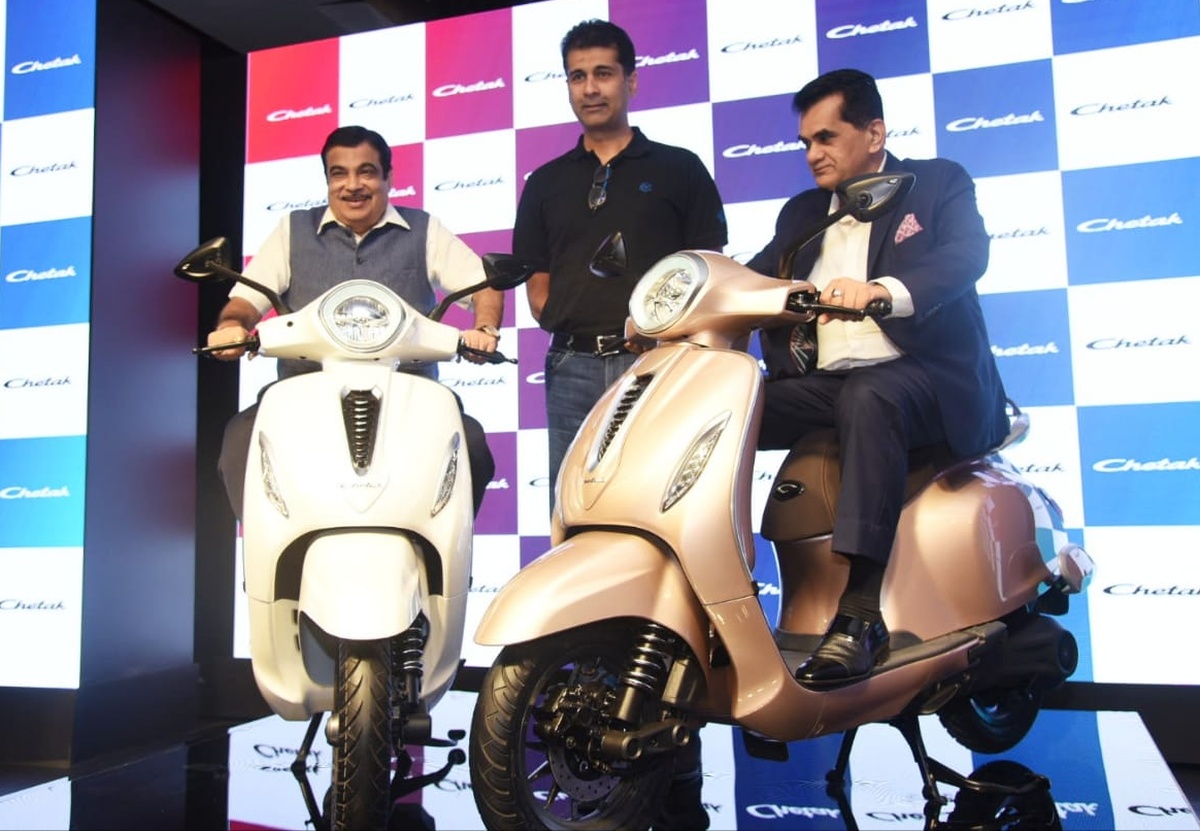
EV players suggest a reduction in the goods and services tax on batteries from 18 to 5 per cent as it would help push demand.

The company has also set a target of achieving Rs 5,000 crore in the next four years, while for the current fiscal the company expect around 15-18 per cent growth in revenue.

Surajeet Das Gupta explains why Mukesh Ambani's target is by no means impossible.
 © 2026 Rediff.com - Advertise with us - Disclaimer - Privacy Policy - Sitemap - Feedback - About us - Terms of use - Grievances